
Why are run clubs so popular? What changed, and what to expect
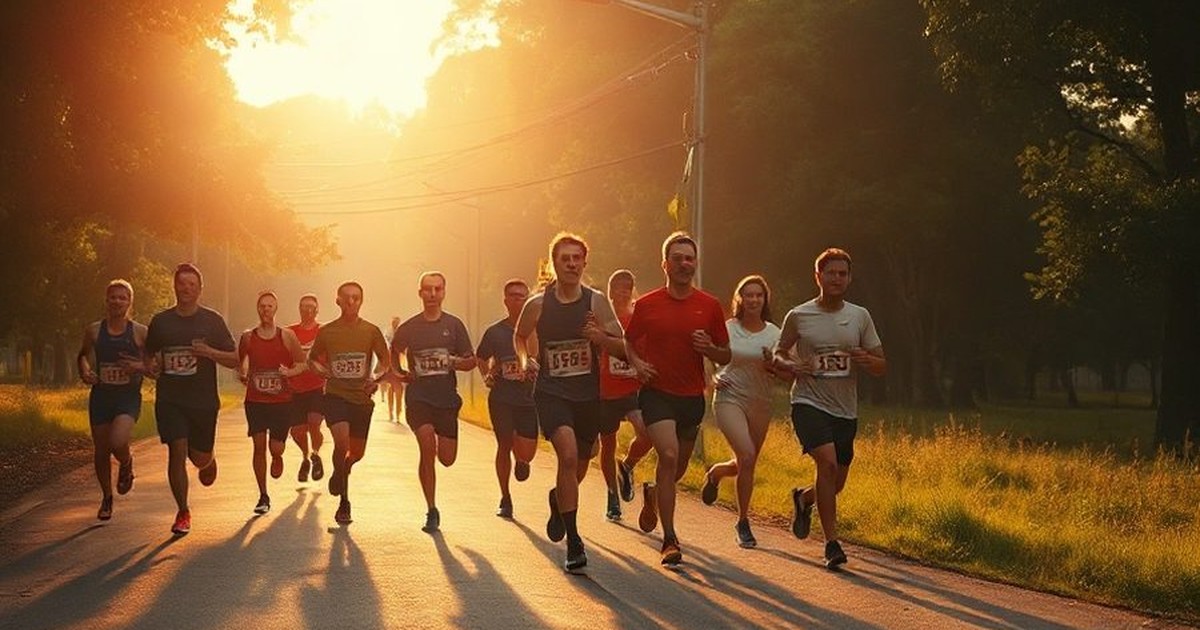
Run clubs are popular because they give people a low-pressure way to meet others at a fixed time each week, and the growth is measurable: running clubs on Strava grew 3.5 times in 2025 (Strava Year in Sport 2025). In our own directory, 59 of the 75 clubs we list carry the social tag. This guide covers what changed, when clubs actually meet and what your first run will be like.
Why are run clubs so popular right now?
Part of the answer is that the evening alternatives have shrunk. Fewer Americans say they drink, and in Britain about one in four late-night venues has closed since 2020.
In July 2025, 54% of U.S. adults told Gallup they drink alcohol, the lowest share in the poll's trend since 1939. The record is by one point, from a Consumption Habits poll of 1,002 adults with a margin of error of plus or minus 4 points, so read it as a signal rather than a precise count.
The change looks sharper among younger adults. Gallup's survey estimate for adults aged 18 to 34 who drink fell from 59% in 2023 to 50% in 2025. That is a subgroup of the same 1,002-person poll, so the figure is indicative rather than exact.
In Britain, about one in four late-night venues (26.4%, nearly 800 businesses) closed between March 2020 and June 2025, according to the Night Time Economy Monitor from CGA by NIQ and the Night Time Industries Association.
How fast are run clubs growing?
Quickly, at least among people who track their exercise. Running clubs on Strava grew 3.5 times in 2025, according to Strava's Year in Sport 2025 report.
Strava also says new clubs on the platform nearly quadrupled in 2025, taking the total to 1 million clubs. A year earlier, its 2024 Year in Sport report cited a 59% increase in running club participation globally in 2024.
The 2025 report draws on a survey of more than 30,000 people in over 185 countries, although the 3.5 times figure comes from Strava's own activity data rather than the survey.
One caveat. Strava users are people who already track their exercise, so Strava's numbers describe active people, not the whole population. And the drinking, venue and run club figures come from separate surveys that sit side by side. They do not prove that one caused the other.
Why do people join a run club instead of meeting at a bar?
Mostly to meet people, and many prefer doing that while moving. In Strava's 2024 survey of more than 5,000 active people in over 190 countries, Gen Z were 4x more likely to want to meet people through working out than at a bar.
The same report found that nearly 1 in 5 Gen Z respondents went on a date with someone they met through exercise. That is an outcome, not a reason to join.
The format does a lot of the work. Running side by side takes away the face-to-face pressure of a bar table. You talk while looking at the path, and if the conversation stalls you can drop back a group without it meaning anything.
A social pace is one where you can finish a sentence. That is why a new runner can usually keep up with a group of strangers for the whole route.
There is also a clear start and finish. You know when it begins, and when the run is over you can go home without having to make an excuse.
When do run clubs meet?
Mostly on weekday evenings, with a smaller but steady block of early weekend mornings. Of the 71 weekly runs in our directory with a published day and start time, 35 (49%) are on a weekday evening and 21 (30%) are on a weekend morning before 10am.
Saturday runs are all early: every one of the 12 starts before 10am. Sunday is looser, with 9 of its 14 runs starting before 10am.
The weekday evening slot suits people who finish work and want a run where they might otherwise have had a drink. If you are trying to swap a late Friday for an early Saturday, the 12 Saturday runs are the ones to look at.
| Day and time | Weekly runs |
|---|---|
| Weekday evening | 35 |
| Saturday, before 10am | 12 |
| Sunday, before 10am | 9 |
| Sunday, 10am or later | 5 |
| Weekday, before 10am | 10 |
| Total | 71 |
What happens at your first run club?
You turn up, find the group, run at a pace that suits you and end up back near where you started. Each listing in our directory shows the day, start time and meeting point, and the club’s own page will say if it asks anything of you first.
Arrive five minutes early. If there is a briefing, use it to say it is your first time. It is the easiest way to get pointed to the right group.
Some clubs split into pace groups. On a first visit, pick the slower one. You will learn the route, and that is fine.
Bring water, particularly for evening runs in warm cities. Coffee afterwards is common but not universal, so check the listing: some clubs name a cafe, others finish at the start point and everyone goes their own way.
If you are new to running, start with the 6 clubs tagged for beginners in our run club directory.
How do I find a run club near me?
Start with our run club directory, which lists 75 clubs in 17 cities with the day and start time of each weekly run. The cities with the most clubs listed are London, Phuket, Bangkok, New York City, Perth, Shanghai and Canggu.
In Britain, the London run clubs page has 6 listings. In the U.S., the New York City run clubs page has 5.
In Asia and Australia, the Bangkok run clubs page and the Perth run clubs page each list 5. The Melbourne run clubs page lists 4.
When comparing clubs, check the start time before the tag. A social club at 06:30 on a Tuesday asks more of you than a Saturday run that finishes at a cafe.
Is a run club a good replacement for a night out?
For some people, yes, but it is a different kind of evening, and it is fair to say what you give up.
Nobody is cooking you dinner, and there is no table to settle in at. The people are the point. If you only want the run, the social part can feel like hard work.
Two things can put you off. Some clubs fill up, and a big group is harder to break into than a small one. Some can feel cliquey: the regulars know each other and drift into the same conversations afterwards. That is rarely unfriendliness, but on a first visit it can feel like it.
Neither is a reason to give up. Go back a few times before you decide, and if it still feels closed, try another club in the same city if there is one.
A run club will not replace a good dinner with friends. It works best as a different slot in the week, one that leaves you up early on a Saturday rather than out late on a Friday.
Find a run club near you
Browse the full run club directory, or go straight to the Berlin run clubs page, the Chicago run clubs page or the Boston run clubs page.
If a few weeks of group runs have you thinking about a start line, see upcoming running races or every race in our calendar, and sign up for our weekly race email.
Run club questions
Do I need to be fast to join a run club?
No. Social clubs run at a pace where people can hold a conversation. If the club splits into pace groups, join the slowest one on your first visit and move up later if you want to.
Do run clubs cost money?
It depends on the club. Check the club's own page for a fee or membership before you go. Bring a little money if the run ends at a cafe.
Is it awkward to go to a run club on your own?
You do not need to bring anyone. Tell someone it is your first time when you arrive, and stay for the coffee afterwards if there is one: it gives you more time to talk.
Can you meet a partner at a run club?
Some people do. In Strava's 2024 survey, nearly 1 in 5 Gen Z respondents went on a date with someone they met through exercise. Treat it as a running club first, though: people keep coming back to clubs where they feel comfortable.
What should I wear and bring to my first run club?
Running shoes, clothes you are happy to sweat in, and water. Add a light layer for early weekend runs: 21 of the 71 timed runs in our directory start on a weekend morning before 10am.
Sources
- Gallup: Proportion of Americans who drink at new low (13 August 2025)
- Night Time Industries Association with CGA by NIQ: Night Time Economy Monitor, closures in Britain's late-night venues (26 August 2025)
- Strava Year in Sport 2025 trend report (2 December 2025)
- Strava Year in Sport 2024 trend report (4 December 2024)
Club counts and run times come from our own run club directory, checked on 26 October 2026. Survey figures are quoted from the sources above and described as the source describes them.